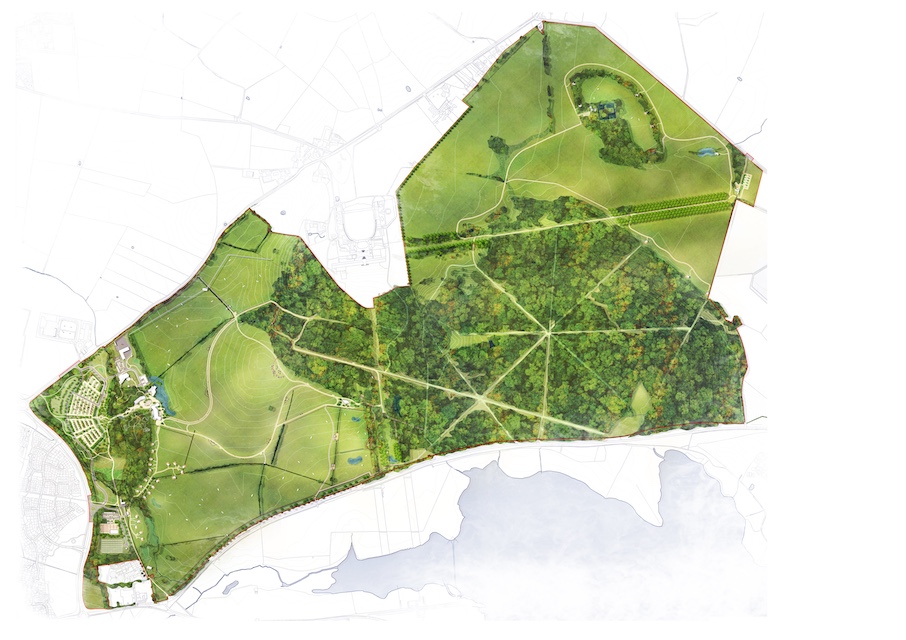
We are pleased to announce that the planning application for Wild Rutland – an ambitious and visionary new conservation and wildlife-led visitor attraction – has been submitted to Rutland County Council.
The plans propose the creation of a new landmark destination stretching from Burley Wood to the Oakham bypass in Rutland, encompassing 1,000 acres of historic parkland, arable farmland and woodland – conserving it for future generations.
What is Wild Rutland?
Wild Rutland was born from a deep love and respect for the animals and plants that call this historic landscape home. It is important for us to create a place where they can truly thrive.
Our vision for Wild Rutland is to create a first-of-its-kind visitor experience that enables nature lovers to experience the wonder of British wildlife within a picturesque rural setting, whilst also restoring and conserving the indigenous species that live there. We see Wild Rutland as a unique opportunity to secure the long-term protection of the biodiversity and heritage of the site, while benefiting nature and the community of Rutland alike.
It’s incredibly important to us that Wild Rutland is the best possible home for nature – from the vast network of trees to the smallest insects and we have set out to create something genuinely new, to support native wildlife and preserve biodiversity alongside enhanced approaches to woodland, parkland, and site management that draw on best practices from across the county. We aspire for Wild Rutland to stand as an exemplar model of conservation-led ecological-tourism – one that restores heritage landscapes, reconnects people with nature and sets a benchmark for sustainable land management in the UK.
What is in the plans?
Wild Rutland will offer visitors an unparalleled journey through untamed habitats and curated encounters that celebrate native species. Visitors will be invited to explore the relationship between people, wildlife, and landscape through thoughtfully designed spaces and interpretive features.
Key features of the proposal include:
- Comprehensive programme of habitat restoration and conservation initiatives aimed at restoring lost habitats, enhancing and connecting existing ones and creating new ones
- Substantial wildlife conservation areas
- Controlled, accessible walking routes throughout the woodland and grasslands
- An education and exhibition centre providing a dedicated space for school groups and visitors to learn about nature and engage with the site’s environmental and heritage story
The plans also include secure enclosures for a range of native UK species some of which may be reintroduced to the site at a later stage, designed to protect the animals themselves and safeguard the site’s delicate ecosystem.
To complement the wildlife experience, leisure facilities within the proposal include:
- A nature-inspired Visitor Village including extensive high-quality food and beverage outlets
- Self-catering overnight accommodation designed to encourage longer stays in Rutland
- A number of padel and tennis courts
- A sustainable and bespoke-designed adventure playground offering a creative and engaging space for families to ignite imaginations and unlock adventure
- A high-ropes course will weave sensitively through the existing tree canopy, carefully designed to minimise environmental impact while providing an exciting woodland experience.
Who is behind Wild Rutland?
Wild Rutland is being developed by two generations of the Hanbury Family, who have been custodians of the estate for generations, and is supported by Hugh Vere Nicoll, the CEO of Wild Rutland.
The project is driven by a team with a deep knowledge and respect for the site and the local area, working with experts in the fields of restoration, conservation, education, tourism, attraction development and management.
How were the plans designed?
These plans are the result of a great deal of hard work and extensive consultation. The full planning application has been finalised after a rigorous process of consultation with ecologists, historic landscape specialists, leading attraction development and management experts and national bodies and organisations, as well as drawing on insights and feedback from local environmental experts and the local community.
What happens next?
The submission of the plans marks the beginning of a statutory consultation process led by Rutland County Council. Community members will have the opportunity to review the application and provide feedback in the coming weeks.
The full plans for Wild Rutland can be seen on the Council's website here. We now look forward to hearing from Rutland County Council as the application progresses.
To keep up to date with the latest new on the planning application, please sign up to our newsletter here or follow us on social media.